What “launch-ready” actually means
Auth, payments, error states, analytics — the unglamorous checklist that separates a demo from something you can put in front of paying customers.

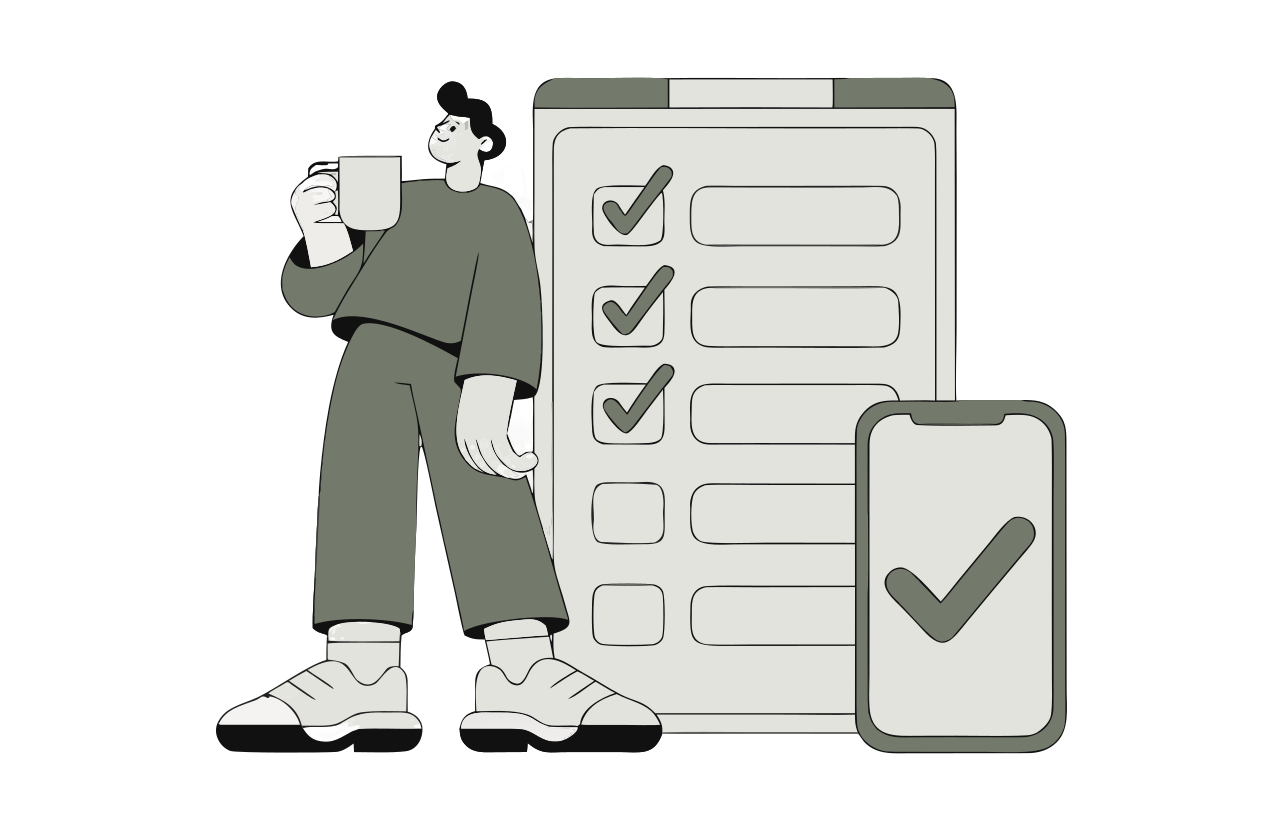
There’s a particular kind of gap that catches first-time founders off guard: the distance between “it works when I click through it” and “I can put this in front of a stranger who paid me.” The demo is the easy eighty percent. Launch-ready is the unglamorous twenty percent that takes its own sweet time — and it’s almost always the part that gets quietly compressed into a single line on the schedule.
Launch-ready doesn’t mean finished. It means a person who isn’t you, doing something you didn’t script, in conditions you didn’t plan for, walks away having succeeded rather than stuck. Here’s the checklist we actually run before we’re willing to call something ready.
The list everyone underestimates
- Auth that handles the bad days. Not just login — password resets, expired sessions, the verification email that lands in spam, the person who signs up twice. The happy path is a fraction of the work.
- Payments, end to end. Successful charges are easy. It’s the declined card, the failed renewal, the refund, and the receipt that separate a real product from a demo.
- Error states for everything. Every screen needs an answer for empty, loading, and broken. What does a user see with no data, with slow data, and with no connection at all?
- Analytics from day one. If you launch without knowing what people actually do, you’ve launched blind. The instrumentation has to be there before the first user, not bolted on after.
- The boring operational stuff. Backups, an error monitor that pages a human, a legal page, a support inbox someone reads. Nobody demos this. Everybody needs it.
Error states are where it hurts most
If one item on that list gets cut under time pressure, it’s almost always error states — and it’s the one that does the most damage. When everything goes right, your product looks identical to a polished one. The difference shows up the moment something goes wrong, which for real users is constantly: spotty wifi, a fat-fingered form, a card that bounces, a page opened before there’s any data in it.
Users don’t judge you on the happy path. They judge you on what happens when something breaks.
A blank screen where an error message should be is the fastest way to make a working product feel broken. A clear “that didn’t go through — try again” is often the entire difference between a user who trusts you and one who quietly leaves and never tells you why.
Why we treat this as part of the build
The trap is scheduling all of this as a final “polish” week. It isn’t polish — it’s a big chunk of the actual work, and treating it as an afterthought is how launches slip by a month at the worst possible moment. We build the unglamorous parts alongside the features, not after them, so launch-ready is a state we stay close to rather than a cliff we sprint at.
The good news is that none of this is hard once it’s named. It just has to be planned for honestly. Launch-ready isn’t a higher bar of cleverness — it’s the discipline to finish the twenty percent everyone can see but nobody wants to schedule.
That's the work we do every day. Tell us what you're shipping.